Kitchen & tabletop
A table is a set of decisions.
Every piece here is listed with the material it is made from, the gauge or the hardness that governs how it behaves, and what it will and will not survive. Choose the pieces, or take the service.
Hover or tab through a piece to name it
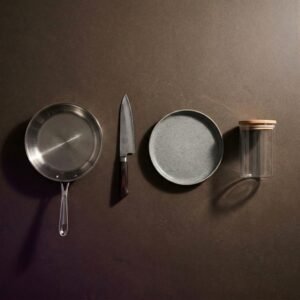
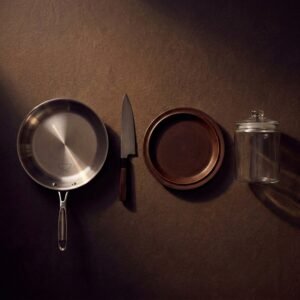
Boards, bowls, scales and the tools that do the work before the heat goes on. Bought once, in materials that take a knife without blunting it.
See the prep
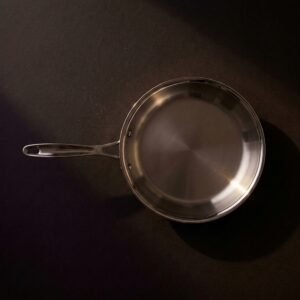
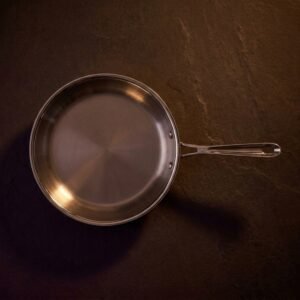
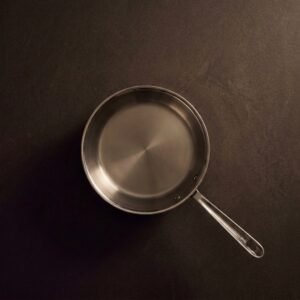
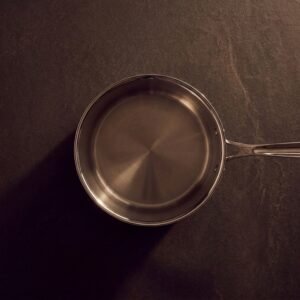
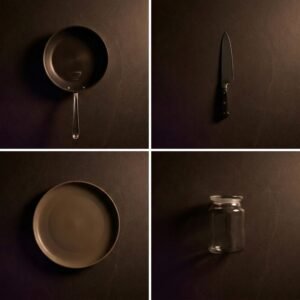
Clad stainless and cast iron. We list the ply, the gauge and the induction compatibility, because those three decide how a pan behaves and nothing else does.
See the heat
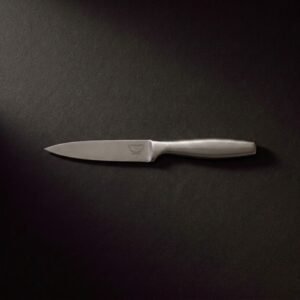
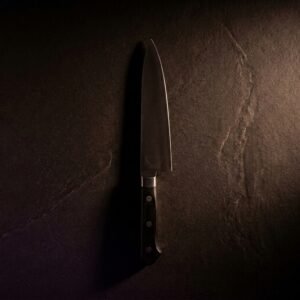
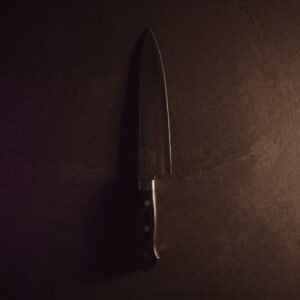
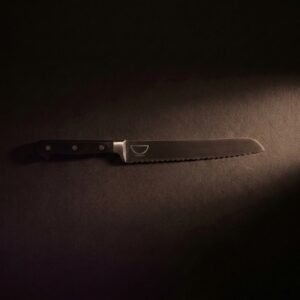
Forged high-carbon and stainless blades, with the steel, the Rockwell hardness and the edge angle stated. A knife is a number, not an adjective.
See the cut
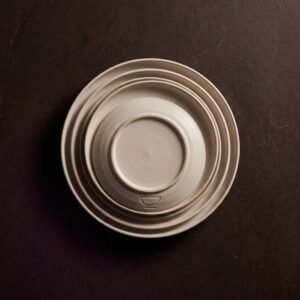
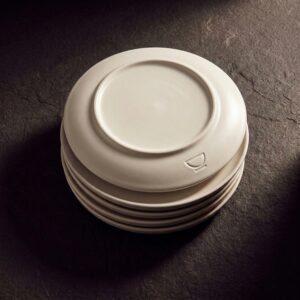
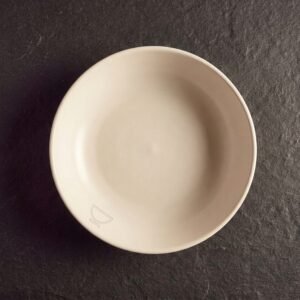
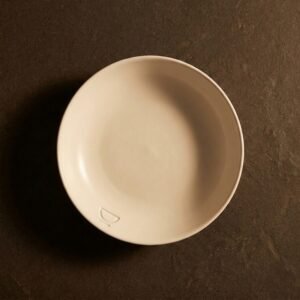
Vitrified stoneware and porcelain for the table. Chip-resistant, dishwasher-safe, and made in shapes that stack without chipping each other.
See the serve
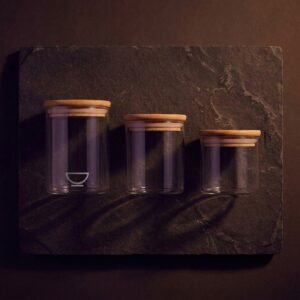
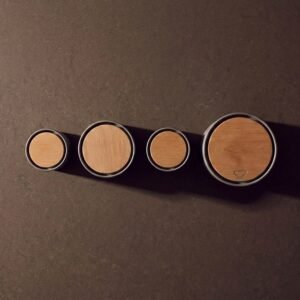
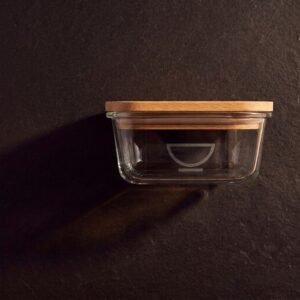
Borosilicate, beech and stainless. Airtight where it should be, oven-safe where it says so, and sized to the shelf rather than to the photograph.
See the store
Assembled services — a full cookware set, a knife block, a dinner service. The same pieces, chosen to work together, at less than the sum.
See the sets
On materials
Three numbers decide almost everything.
A pan is described by its ply and the thickness of its aluminium core. Five-ply with a 2.6 mm core holds temperature through a cold protein and recovers fast; three-ply with a thin core does neither, and no amount of finish changes that.
A knife is described by its steel and its hardness. High-carbon at 60–61 HRC takes a finer edge and holds it longer, and is more brittle at the tip. Softer stainless at 56–58 forgives a dishwasher and a bone, and needs the steel more often. Neither is better; they are different tools, and the number tells you which you are holding.
Tableware is described by its body. Vitrified stoneware has been fired until its water absorption is under half a percent, so it does not craze, stain or take on the smell of what was in it. Unvitrified earthenware, sold at the same prices in the same shapes, does all three within a year.
Those three numbers are on every relevant page here, in a table, above the description.
A pan wall in section. The core is the part that costs money and the part nobody photographs.
The whole service
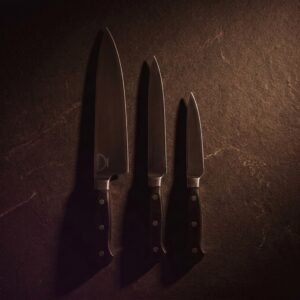
Knife set, three piece
Paring, utility, chef’s — the three that do everything.
$99.00
See the serviceThe house
TBL Holdings is a housewares supplier. We do not manufacture, and we are not going to pretend a factory in our name exists. What we do is choose, and then publish the basis on which we chose, which in this category is unusual enough to be the whole proposition.
Kitchenware is sold on adjectives. Professional. Restaurant-grade. Heirloom. None of those words has a definition and none of them appears on this site. What appears instead is the ply and the core thickness, the steel and the Rockwell hardness, the water absorption of the body, the gauge of the sheet, the oven-safe temperature and the actual capacity in litres rather than in servings.
Some of that makes a piece look worse. A pan we like has a 2.0 mm core rather than 2.6, and we say so and price it accordingly. A stoneware line we stock is dishwasher-safe but not microwave-safe, and that is on the page above the description rather than in a footnote. A catalogue that only tells you what a thing is good at is a catalogue you cannot use to choose between two things.